Intro
Design
Airframe
Hardware
Software
Testing
Launch 5
Glossary
Links
Contact
Digesting the Second Launch
| Some Instrument Data |
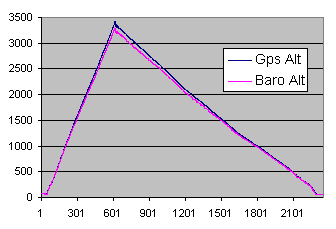
This is probably still a calibration error, which has been tweaked (again). (Note the x-axis at right is scaled in seconds)
|
|
|
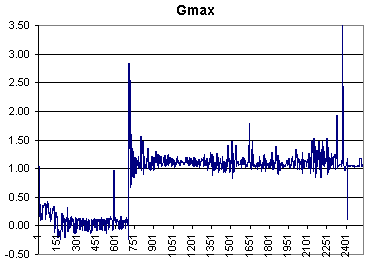
There was some wild swinging this time on the way up, as you can see on the left end. The maximum G load at pullout from the dive (at about 750s) after release was 2.8 - right about what the flight simulation predicted. The swings in the cruise portion of the flight mostly correspond to turns, when you look at the second-by-second G loadings, although much is likely turbulence. Most of the return flight time was spent in a banked turn of some kind. The parachute opening is actually the second-highest spike on the right end, at only 1.93g (very nice!). The high spike on the right, at 4.5g or so, is the touchdown, while the low spike is next to it probably someone picking the glider up.
|
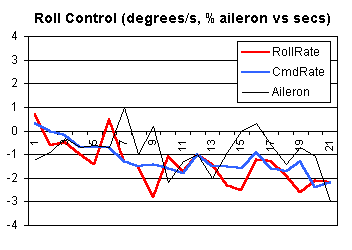
Also note that the roll command algorithm is always making small control motions to fight turbulence. (Note the x-axis above is scaled in seconds)
|
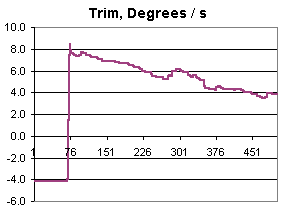
The internal temperature did rise 10c over that period, which might affect the gyro, but still - that's a fair bit of variation. It isn't, however, outside of the expected range of gyro neutral drift. (Note the x-axis on the left is scaled in status-telemetry data points, which are 4 seconds apart)
|
|
Conclusions |
|
The aircraft met its design goals in terms of flight behavior, even down to the trimmed airspeed. The glideslope appears to be around 14:1, exceeding that design goal, and it has a neutral-elevator trim airspeed of about 42 knots, which is very near to its airspeed for best glide. It seems the design estimates of the glider's fuselage parasite drag had been overly pessimistic, as this performance occurred even with the nose-cone joint and chute hatch edges disturbing the airflow. As a bonus, the gyro-feedback loop seemed to find that the aileron trim for zero roll rate was almost perfectly at centre. The quickcam also needs attention, something that didn't make it on the work plan for this flight. Other issues were that the attempted fix for the external temperature probe didn't fully improve it's accuracy. Overall though, just a fantastic flight. Almost there.
|
|
Changes for Next Time |
|