Intro
Design
Airframe
Hardware
Software
Testing
Launch 5
Glossary
Links
Contact
Digesting the Third Launch
|
|
|
| But What Happened? |
|
|
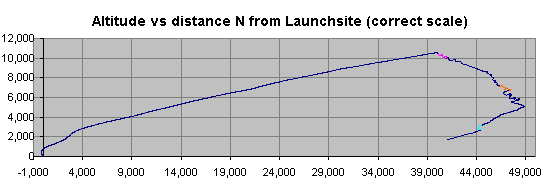
You can see how the winds picked up very strongly (to 40 kts plus) only a few thousand feet into the ascent (note that all scales are in meters here). The glider could have flown back to the launch site if it had gained heading control immediately after cutting away, but 2/3 of the altitude was lost to various acrobatics. |
|
|
|
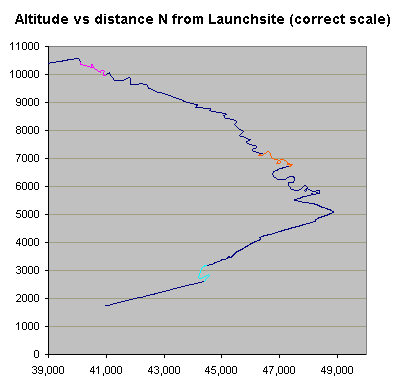
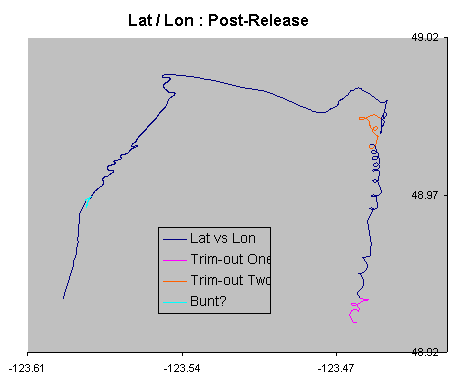
Above and below are profile and lat/lon expanded sections of the flight
telemetry from just after releasing from the balloon. The purple bit is
the automatic initial trim-out attempt. The squiggles after that are the shallow
spiral dive which followed. The orange section is the second trim-out attempt
commanded from the ground. Then, it took some time to sort out the
way over-aggressive elevator trim, before settling into a nice glide
back home, into the strong winds. The light blue section is our last attempt to
adjust the pitch trim, which resulted in the surprise explained further
down on this page. |
|
|
Note that the squiggles in the return path aren't really as squirrelly as they
look. The glider's true air speed was only a little above the wind speed,
which magnifies, say, a 15
degree heading error into a 60 degree apparent track error. That also makes navigation by ground track
difficult for the autopilot.
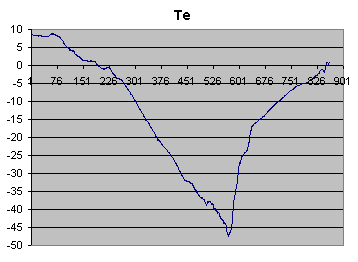
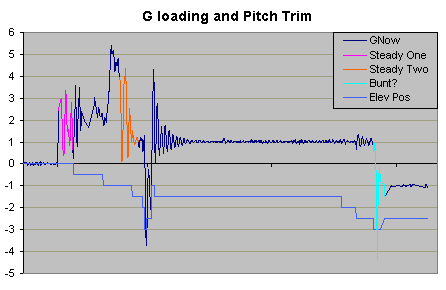
So what happened here? 1) The glider cut away from the balloon, recovered into level flight, and attempted to trim out any roll rate gyro error. 2) A period of spiral-diving occurred, which we on the ground mistook for problems with navigating in the high winds. In fact, it was due to inaccurate roll trim. 3) During that time, the auto-pitch trim feature attempted to pick up speed to fight the high winds. However, the elevator response was 2-3 times stronger than anticipated, so it over controlled. G's built up quickly, and the bank was probably over 70 degrees at times. 4) After we on the ground guessed what might really be wrong, the autopilot was commanded to try trimming itself out again in roll. 5) After the wings were leveled, the great amount of speed built up (200 kts or so at 24,000 feet ASL) resulted in a series of loop-de-loops. That not being enough excitement for it, it mistook the lack of progress into the wind to mean it should pitch down yet again, causing a drastic nose-under bunt of over -3 G's, and possibly even an inverted loop or two. 6) Finally sorting itself out, it began to correctly fly straight and level to the commanded landing site. 7) While on its way to Saltspring Island to land, we told it (not realizing the pitch issue at the time) to try pitching down just one notch, to be sure it would have the airspeed to make it to the landing site. From the ground station, the result seemed to be that it squirmed around a bit, then sorted itself out quickly at the new trimmed speed. In fact, the elevator response was so sensitive that the one extra notch made the wings lift negative - so it did a quick little bunt, came out flying level in the wrong direction, and turned itself around to go where it needed to so quickly we didn't really notice from the ground. It then flew the last 10km or so happy as can be, upside down. From the ground all we saw, was that it was going where it was supposed to, and the G meter read "1.0". Nobody noticed the negative sign in front of the one, although we did wonder why the glide wasn't quite as good as it had been earlier. |
|
|
Conclusions |
Yikes. We came very close to losing the glider in middle of
the Straight of Georgia, where it would have been unrecoverable in
winter open-water conditions. But, a lot was learned:
|
|
Changes for Next Time |
|